
Artificial intelligence in healthcare has spent the better part of a decade oscillating between promise and paralysis. Innovation raced ahead; implementation lagged behind. Regulation arrived; clarity did not always follow. What changed in 2025–2026 was not another abstract principle, but a decisive shift toward operational governance, crystallised in the checklist-based methodology for structured AI implementation and, critically, validated in practice at the Cairo High-Level Meeting on Trustworthy AI in Healthcare.
The publication AI policy in healthcare: a checklist-based methodology for structured implementation arrived at exactly the right moment. As the EU AI Act moved from legislation to enforcement, health systems globally faced a common problem: how to turn high-level legal and ethical requirements into deployable, auditable, and clinically safe AI systems. The checklist methodology answered that question with rare precision, translating fairness, accountability, human oversight, and risk classification into concrete governance steps that hospital boards, clinicians, and regulators could actually use.
That transition from paper to practice was on full display in Cairo.
At the Cairo High-Level Meeting, convened around the Declaration of Cooperation on Trustworthy AI in Healthcare, the checklist approach became a shared operating language. Policymakers, clinical leaders, patient representatives, and industry stakeholders aligned around a common reality: trustworthy AI is not achieved through declarations alone, but through repeatable processes, lifecycle oversight, and measurable post-deployment performance.
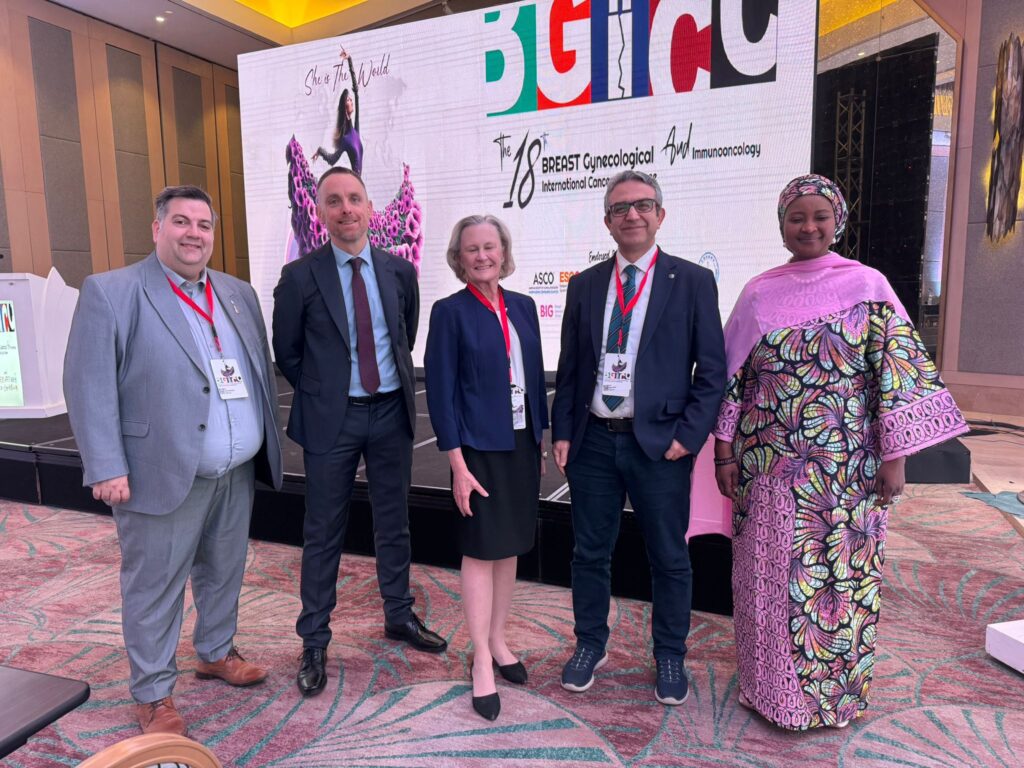

Cairo mattered because it reframed the debate. The discussion moved decisively away from whether AI should be regulated, and toward how it can be safely implemented at scale across borders, health systems, and levels of maturity. The checklist methodology provided the missing connective tissue: a practical bridge between regulation, clinical governance, workforce readiness, and investment confidence.
Equally important was the signal Cairo sent to the global investment and innovation community. By aligning trustworthy AI principles with implementation readiness, validation pathways, cybersecurity, and accountability, the meeting positioned governance not as a brake on innovation, but as a precondition for sustainable foreign direct investment and real-world deployment.
The success of the Cairo meeting underscored a broader truth: healthcare AI has entered its delivery phase. What now matters is governance that is structured, auditable, and clinically grounded, exactly what the checklist methodology offers.
Cairo will be remembered as a pivot point: where principles met procurement, ethics met execution, and trustworthy AI moved from aspiration to implementation.